How to obtain a diploma from Brown University?
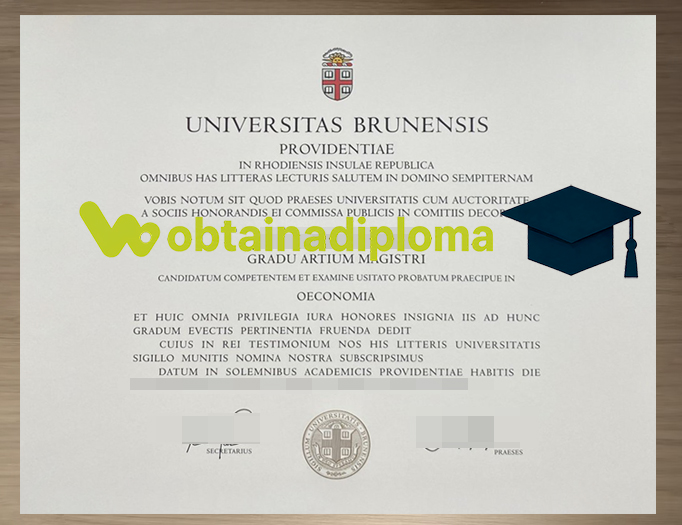
Nestled atop College Hill in Providence, Rhode Island, Brown University stands as one of America’s most distinguished institutions of higher learning.Brown University diploma,Brown University degree,Brown University transcript. As the seventh-oldest university in the United States and a proud member of the Ivy League, Brown has cultivated a reputation not merely for academic excellence, but for a distinctive educational philosophy that empowers students to become architects of their own intellectual journeys.
How easy to get a fake Brown University diploma online?
Founded in 1764, the university has evolved from a small Baptist college into a world-class research institution while steadfastly preserving its foundational commitment to openness, intellectual freedom, and the transformative power of dialogue.
Brown’s origins trace back to 1764, when it was chartered as the College of Rhode Island in Warren. In a remarkable departure from the norms of colonial higher education, Brown became the first college in America to accept students regardless of their religious affiliation—a testament to the spirit of inclusion that continues to define the institution today. The college relocated to its current Providence campus in 1770, and in 1804, it was renamed Brown University in honor of Nicholas Brown, a prominent alumnus and benefactor whose $5,000 gift secured the institution’s future.
The university’s progressive trajectory continued through the centuries. Women were first admitted in 1891 through the establishment of the Women’s College, later renamed Pembroke College, which fully merged with the university in 1971 to create the fully coeducational institution known today. This history of inclusion and adaptation reflects Brown’s enduring willingness to challenge conventions and embrace change.
Perhaps no single element defines Brown more distinctly than its Open Curriculum, introduced in 1970. The innovation stemmed from a 1969 report written by undergraduates Ira Magaziner and Elliot Maxwell, which proposed a radical departure from traditional general education requirements. The new curriculum eliminated mandatory distribution requirements, allowing students to chart their own academic paths across more than 80 established concentrations—or even design their own independent concentrations.lost diploma what to do?
This approach, inspired by President Francis Wayland’s 19th-century vision that students should “study what he chose, all that he chose, and nothing but what he chose,” transformed undergraduate education. Today, Brown students are expected to serve as the architects of their own syllabi, taking responsibility for their intellectual development within a framework that emphasizes depth over breadth. The Open Curriculum remains a defining feature of the Brown experience, attracting students who thrive on intellectual self-direction and interdisciplinary exploration.
While Brown’s undergraduate education is renowned for its flexibility, the university is simultaneously a formidable research institution. With more than 6,000 faculty, scientists, staff, postdoctoral researchers, and graduate students engaged in research, Brown invested $374 million in research and development in 2024. The university’s research enterprise spans disciplines from the humanities to cutting-edge biomedical science, producing innovations that address pressing global challenges.