How much Cost to buy fake Dalhousie University degree?
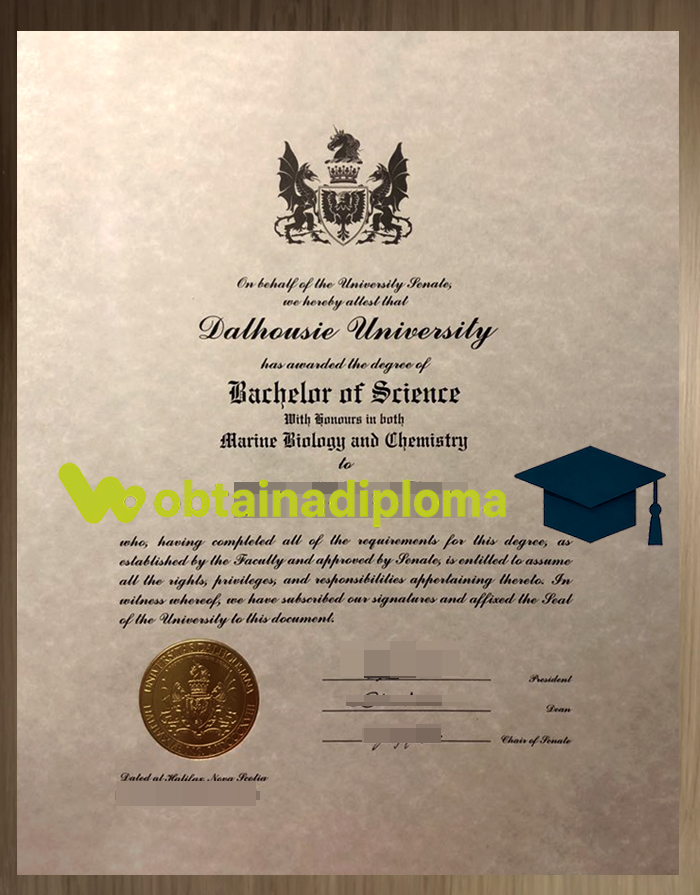
Dalhousie University stands as a monument to the power of an inclusive educational vision, a testament to resilience, and a beacon of research excellence in Atlantic Canada. Founded in 1818 on principles that were radical for its time, the university has grown from a small college in Halifax into a globally recognized research-intensive institution. Dalhousie University diploma,Dalhousie University transcript,Dalhousie University certificate.This article explores Dalhousie’s remarkable history, its physical and academic expansion, its vibrant campus life, and its enduring commitment to pushing the boundaries of knowledge.
How to order a 100% copy Dalhousie University degree?
The Founding Vision: An Uncommon Beginning
The story of Dalhousie University begins not with a royal charter or a religious mandate, but with a vision of nonsectarian education championed by George Ramsay, the ninth Earl of Dalhousie and Lieutenant-Governor of Nova Scotia . In the early 19th century, most universities in the British Empire were organized along denominational lines, restricting admission based on religious affiliation.
Lord Dalhousie sought to create a different kind of institution—a Halifax college open to all, “regardless of class or creed” . He envisioned a school modelled on the University of Edinburgh, which was located near his Scottish home and offered lectures open to male students irrespective of their Christian denomination or nationality .
The university’s founding was funded in an unconventional way, using the spoils of war. During the War of 1812, a small port in Maine called Castine was used as a base by American privateers who harassed British ships. The Royal Navy captured the port and established a customs house there. When the war ended, the navy returned to Halifax with the customs duties it had collected. Lord Dalhousie invested £7,000 of this treasure as an endowment for the college and set aside another £3,000 for its construction .buy fake degree online.
This origin story, however, is not without its complexities. In 2016, Dalhousie commissioned a scholarly report to explore the entanglements between Lord Dalhousie and the institutions of slavery and racism. The report found that some of the customs duties collected from Castine were generated by West Indies traders dealing in slave-produced commodities . This acknowledgment is part of Dalhousie’s ongoing effort to engage critically with its own past.
An Early Struggle for Survival
Despite Lord Dalhousie’s ambitious vision and initial funding, the college’s early years were fraught with difficulty. The cornerstone was laid in 1820, but Dalhousie did not hold its first classes until 1838 . The institution faltered after Lord Dalhousie left Halifax to become Governor General of British North America, and operations remained intermittent for decades . Degrees were not awarded for some time.
The college was reorganized in 1863, reopening with six professors and one tutor . It awarded its first two Bachelor of Arts degrees in 1866, to a student body that consisted of 28 degree-seeking men and 28 occasional students . Money problems continued to plague the institution, and by 1879, its future looked dire.
The university was saved from closure by a generous benefactor—George Munro, a wealthy New York publisher with roots in Nova Scotia . Munro began donating to the university, eventually funding five endowed professorships and providing approximately $83,000 in bursaries and exhibitions. In today’s currency, his total contributions would be worth more than $15 million . For saving the university, Dalhousie observes a special holiday, George Munro Day, on the first Friday in February .