Buy the latest UMass certificate in 2026.
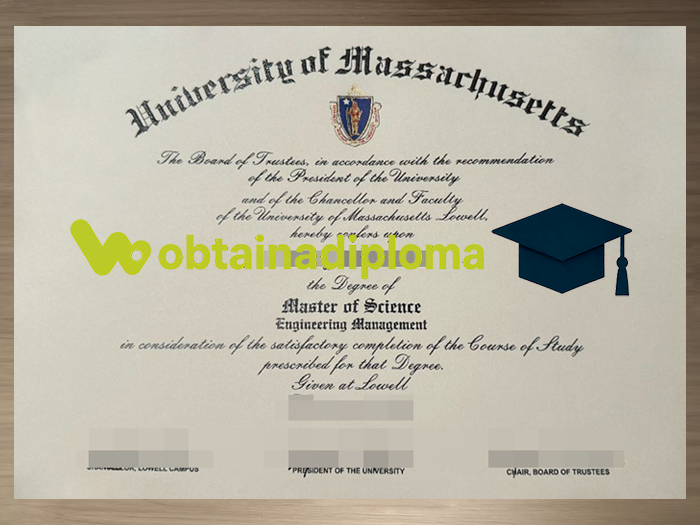
The University of Massachusetts (UMass) stands as one of the most compelling examples of public higher education’s transformative power in the United States. What began in 1863 as a modest agricultural college on 310 rural acres with 56 students has evolved into a world-class public research university system whose influence extends far beyond the borders of the Commonwealth.UMass diploma,UMass certificate,UMass transcript.Today, with its flagship campus in Amherst ranked among the top public universities in the nation and a system that encompasses five distinct campuses, UMass embodies the democratic promise of the land-grant mission while pushing the boundaries of scientific discovery, humanities scholarship, and community engagement.
How to Replace Your UMass certificate online in 2026?
This article examines the University of Massachusetts as an institution of profound academic excellence, research innovation, and public service—a university that has earned its place among the most respected public research institutions in the world while remaining deeply connected to its founding principles of accessibility, opportunity, and the advancement of the common good.
The University of Massachusetts Amherst was established under the Morrill Land Grant Act of 1862, a piece of legislation that fundamentally democratized American higher education by creating institutions dedicated to teaching practical fields such as agriculture, science, and engineering alongside the liberal arts.
The Massachusetts Agricultural College, as it was originally known, opened its doors with a curriculum that reflected this pragmatic vision—combining modern farming techniques, scientific inquiry, and technical education with a grounding in the humanities.
custom graduation certificate maker.
Over the subsequent decades, the institution underwent a remarkable transformation. In 1892, the first female student enrolled and graduate degrees were authorized, signaling a broadening of the university’s mission. By 1931, the institution had outgrown its original agricultural identity and became Massachusetts State College. Sixteen years later, in 1947, it was designated the University of Massachusetts, reflecting its emergence as a comprehensive institution of higher learning.
The post-World War II era ushered in a period of explosive growth that would define the modern university. Enrollment surged from 4,000 in 1954 to 10,500 by 1964 as the Baby Boom generation came of age. This expansion necessitated dramatic physical growth: the construction of the Southwest Residential Complex, Alumni Stadium, and numerous academic departments gave UMass Amherst much of its contemporary form and stature. The 1970s brought additional landmark additions, including the Murray D. Lincoln Campus Center, the iconic W.E.B. Du Bois Library, and the Fine Arts Center—a performing arts venue that would host world-class music, dance, and theater.
By the 1970s and 1980s, UMass Amherst had firmly established itself as a major research institution, marked by the construction of the Lederle Graduate Research Center and the Conte National Polymer Research Center. These investments in scientific infrastructure signaled the university’s ambition to compete at the highest levels of academic research—an ambit